
The booth fabrication process: how a stand is designed, built and installed
Updated: November 2026 · 4 min read
From the first conversation to the last truck leaving the hall, an exhibition stand goes through a set of stages. Knowing them helps you plan, avoid last-minute surprises and know what to expect from your contractor. This is how booth fabrication in Oman works with our team, step by step.
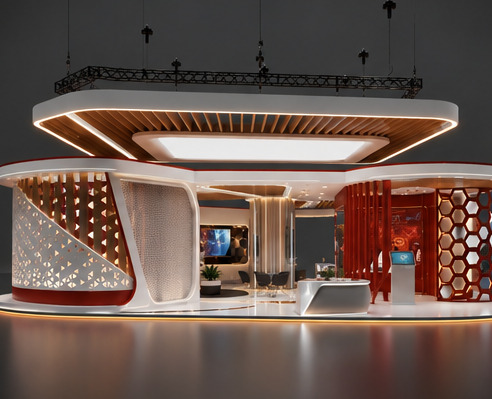
Stage 1 — Brief (3–5 months before the show)
Everything starts with the brief: the show and dates, your plot size and type, your goals, what must be on the stand and your budget range. If you have the organiser's exhibitor manual, share it now — it sets the rules for height, structure and deadlines. A clear brief is the single biggest factor in getting a good design quickly.
Stage 2 — Concept and 3D design
The designer turns the brief into a layout and photoreal 3D renders, showing the stand from the aisle and from inside. You review, comment and the design is refined. This is the cheapest moment to make changes, so take the time to get it right. Our booth design ideas guide lists what to look for in a concept.
Stage 3 — Quotation and sign-off
With the design agreed, you receive an itemised quotation covering structure, finishes, graphics, AV, furniture, installation and dismantling. Once both are approved, materials are ordered and the schedule is fixed. For what drives each line, see how pricing works.
Stage 4 — Technical drawings and organiser approval (2–3 months before)
The design is converted into construction drawings: dimensions, materials, electrical layout and, for larger or two-storey stands, structural details. These go to the organiser for approval by the deadline in the exhibitor manual. At the same time, services such as power, rigging and internet are ordered through the organiser or venue.
Stage 5 — Fabrication (4–6 weeks before)
The stand is built in the workshop: carpentry and CNC work for walls and counters, metalwork and truss for structures and lighting, painting and finishing, graphics printing and AV preparation. Building as much as possible off-site keeps the time on the show floor short and the quality consistent.
Stage 6 — Test build and quality check
Where possible, key parts of the stand are assembled in the workshop to check fit, finish and lighting before everything is packed. It is far easier to fix a problem here than during build-up.
Stage 7 — Transport and installation (build-up days)
The stand is transported to the venue and installed during the organiser's build-up window: flooring first, then structure, walls, graphics, lighting, AV and furniture. Electrical connections are made, everything is tested and the stand is cleaned and handed over before the show opens.
Stage 8 — Show days
During the show, a technician can stay on call for small fixes, lighting adjustments or AV issues, so your team can focus on visitors.
Stage 9 — Dismantling
After the show closes, the stand is dismantled within the venue's breakdown window. Reusable parts are packed for storage or return, and waste is removed from the hall.
How long does it take overall?
For a custom stand, allow three to five months from brief to show day, with more for two-storey builds. Smaller stands and shell-scheme upgrades can be done much faster. The most common cause of delay is not fabrication but late decisions and late organiser submissions.
Choosing a contractor for your next show? Read our builder checklist, or see what a custom exhibition stand involves.
Frequently asked questions
How long does booth fabrication take?
When do I need to submit stand drawings to the organiser?
How long does it take to install a stand at the venue?
Who dismantles the stand after the show?
Exhibiting soon? Get a free stand concept and quote.
Get a free stand concept & quote